
Preview · Bundesliga · 12 min read
Hoffenheim's sharp edges meet Dortmund's deep pockets of talent
The away side carry the higher ceiling, but the home side carry the sharper knife.
Nadia Byrne@thetactician
Ireland · The Tactician · September 5, 2026
The shape of the afternoon
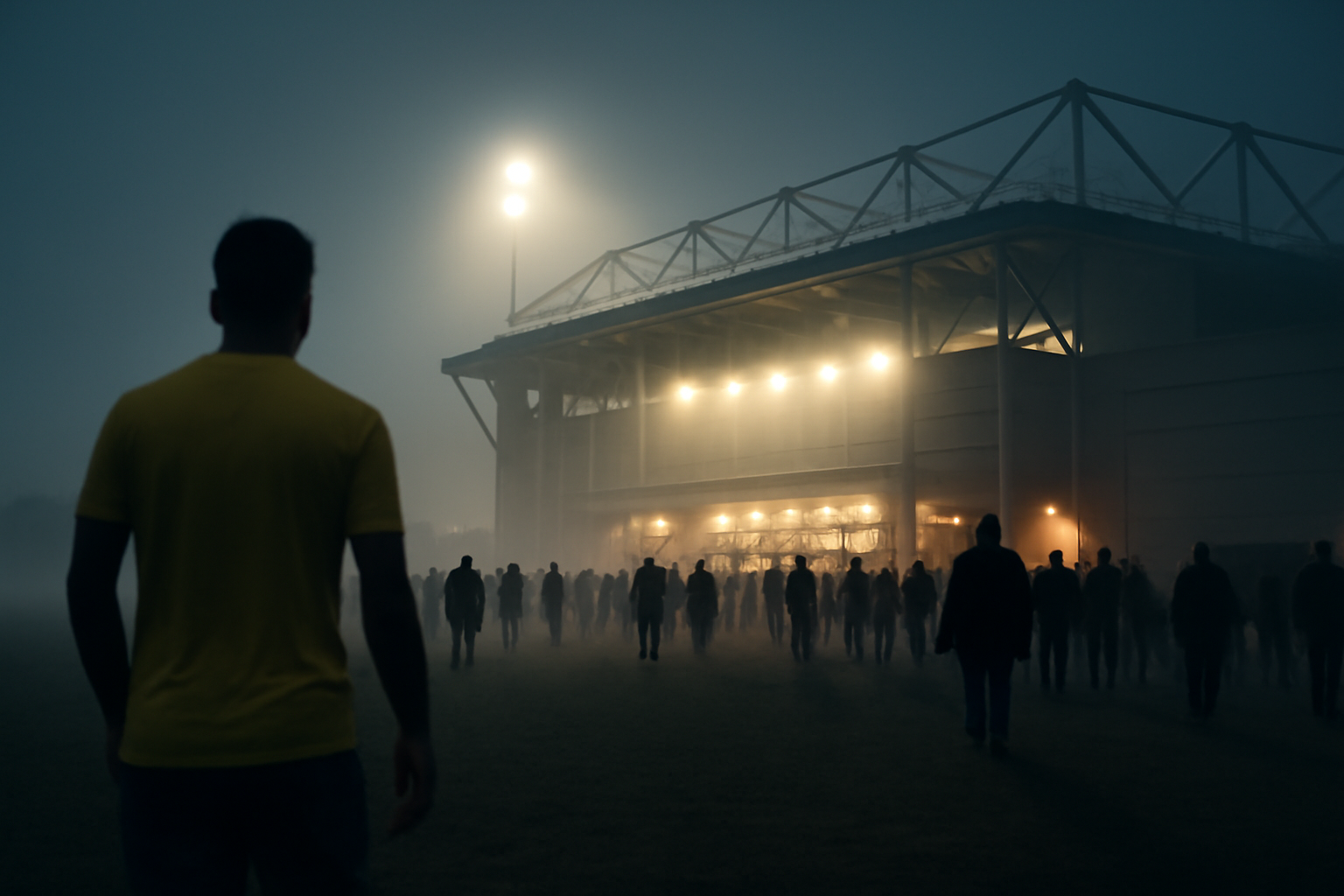
Late summer in the Kraichgau. The sun still has some heat in it when the teams emerge at the PreZero Arena, and the grass will be quick, dry and true. That matters here. Both sides want to play through the middle third at speed, neither wants to retreat into a low block for ninety minutes, and the surface should reward the team that can shift the ball before the opposition's press arrives.
The model gives Borussia Dortmund 45 percent against Hoffenheim's 28, with the draw at 27. The conviction score sits at 60 out of 100, which tells you something honest: this is not a slam dunk for the visitors. It is a lean, not a law. And the longer you stare at the probable lineups, the more you understand why the number refuses to climb higher.
Hoffenheim line up in a 4-4-2 that is less a rigid block and more a set of instructions about where to hunt. Oliver Baumann starts in goal, shielded by Vladimir Coufal and Bernardo as the full backs, with Ozan Kabak and Amar Hajdari in the centre. In front of them, a midfield four of Pavel Wimmer, Wouter Burger, Lindon Avdullahu and Anis Daghim. Up top, Adam Hlozek partners Bazoumana Conte. It is a side with balance: experience at the back, legs in the middle, and two forwards who can stretch a defence in different ways.
Dortmund answer with a 4-3-3. Alexander Meyer in goal. Julian Ryerson at right back, Daniel Svensson on the left, Felix Mane and Waldemar Anton in the middle of the defence. The midfield three of Marcel Sabitzer, Felix Nmecha and Joey Veerman gives them control on paper. Up front, Samuel Inacio and Fabio Silva wide of Maximilian Albert, the central striker. That is a front three with pace, trickery and a penalty box presence, but also three players who like to drift and combine rather than simply pin the last line.
Two systems. Two sets of intentions. The match will be decided by which side can impose its own rhythm in the first twenty minutes, because both teams score early and often when they get the first goal. Neither is built to chase.
The high press and the space behind it
Hoffenheim's 4-4-2 is not the old-fashioned flat bank of four you might picture. Watch how the wide midfielders pinch in when Dortmund have the ball in their own half. Wimmer and Daghim narrow the pitch, forcing play toward Burger and Avdullahu, who step out aggressively to meet the receiver. The idea is to make Dortmund play through the centre, where Nmecha and Veerman want to receive, and then squeeze them before they can turn.
The risk is obvious. If Dortmund break that first line of pressure, they have Ryerson and Svensson flying forward into the space vacated by the wide men. That is where the match opens up. Hoffenheim's full backs, Coufal and Bernardo, will be asked to do a thankless job: tuck in when the ball is central, stay narrow enough to protect the centre backs, and still sprint out when the ball is switched to the opposite flank.
Dortmund's build has a clear pattern. Sabitzer drops between the centre backs to create a back three in possession. Nmecha pushes higher, Veerman floats left of centre. From there, the ball moves quickly to the wide forwards. Inacio on the right loves to come short, take the ball to feet, then spin his man and run the outside channel. Silva on the left is more direct, more inclined to stretch the defence with runs in behind. Albert holds the centre, occupying Kabak and Hajdari so the wide men get one on ones.
The key duel comes early, and it is not the one most people will watch. Whoever starts at left back for Hoffenheim, Bernardo by the looks of it, will face Inacio in one on ones all afternoon. If Bernardo can hold his ground, show Inacio inside rather than letting him get to the byline, Hoffenheim can keep their shape. If Inacio turns him once or twice in the first quarter of an hour, the whole defensive line will start to slide across, and that is when the gaps appear between Kabak and the covering full back.
On the other side, Coufal versus Silva is the mirror image. Coufal is older, wilier, less likely to get beaten for pace twice in the same move. Silva will try to get him isolated and run at him early. This is the chess match within the match, the one the analysts will talk about at half time, and the one that decides which full back gets substituted first.
Model edge: away +2.5 pts vs the market
A model probability, not a certainty. Analysis and education, not betting advice.
The midfield battleground
The probable XIs tell you that this game will be won or lost between the two penalty boxes. Four central midfielders, three of them with serious pedigree, all competing for the right to feed their forwards.
Hoffenheim's Burger is the anchor. He reads the game early, steps in front of passes, and rarely wastes a touch. Next to him, Avdullahu is the runner, the one who covers the ground when Dortmund try to switch play. They will be outnumbered in quality terms by Sabitzer, Nmecha and Veerman, but they have a simpler job: make those three play facing their own goal rather than toward Baumann's.
Sabitzer is the danger. He has the licence to arrive late in the box, and when Albert drops deep to link play, Sabitzer is the one who attacks the space the striker has vacated. Hoffenheim's centre backs will have to decide who follows Albert when he drops. If Kabak steps out, the space behind him becomes Sabitzer's playground. If Kabak stays, Albert gets time to turn and face the defence, which is where he hurts you most.
Veerman adds the through ball. He sees the pass earlier than almost anyone on the pitch, and he has the technique to weight it perfectly over the top or slide it between the full back and the centre back. Hoffenheim's line will have to stay connected, step up together, and trust that the offside trap holds. Push too high and Veerman drops the ball behind them for Silva to run onto. Drop too deep and he has time to pick his spot from range.
Hoffenheim's answer is direct. When they win the ball, they do not mess around. Wimmer and Daghim release early, looking for Hlozek and Conte. Hlozek drops off the front line, receives between the lines, and turns to face the Dortmund midfield. Conte stretches the defence with pure pace, running the channels and forcing Mane and Anton to make decisions about when to step out and when to hold.
This is where Dortmund's defensive structure gets tested. Nmecha is not a natural holding midfielder, and when he pushes forward to join the press, the space in front of Anton and Mane opens up. If Hoffenheim can win the ball in their own half and get it to Hlozek quickly, they have a real chance to catch Dortmund on the break with numbers over.
The thin line between control and chaos
There is a version of this match where Dortmund dominate possession, move the ball patiently, score once in the first half and once after the hour mark, and Hoffenheim never really threaten. There is also a version where Hoffenheim press high, win the ball in dangerous areas, and turn the match into a chaotic, end to end contest full of turnovers and transitions. The model leans toward the first version, but the conviction score knows the second is very much alive.
Hoffenheim have a habit of making matches ugly in the best possible way. They do not allow you to settle into a rhythm. They foul in midfield, break up play, slow the game down when they have the lead and speed it up when they need a goal. It is not cynical, it is just smart. They know they cannot trade punches with Dortmund for ninety minutes, so they pick their moments.
Dortmund, by contrast, would love the game to stay open. They have more individual quality in the wide areas and more composure in midfield. The longer the match stays on their terms, the more likely they are to find the breakthrough. Their danger is impatience. With the quality they have, there is always a temptation to force the final pass, to try the spectacular when the simple option is available. If they give the ball away cheaply in the final third, Hoffenheim will punish them on the break.
Watch the first fifteen minutes closely. Dortmund will try to establish control, moving the ball from side to side, testing whether Hoffenheim's midfield four can shift across quickly enough. If Hoffenheim hold their shape and force Dortmund into sideways passes, the crowd will grow and the home side will grow with them. If Dortmund find the early goal, the pattern changes completely. Hoffenheim will have to come out and play, which is not their game, and the spaces behind their full backs will open up.
- 1O. Baumann
- 2V. Coufal
- 3O. Kabak
- 4A. Hajdari
- 5Bernardo
- 6P. Wimmer
- 7W. Burger
- 8L. Avdullahu
- 9A. Daghim
- 10A. Hlozek
- 11B. Conte
- 1A. Meyer
- 2J. Ryerson
- 3F. Mane
- 4W. Anton
- 5D. Svensson
- 6M. Sabitzer
- 7F. Nmecha
- 8J. Veerman
- 9S. Inacio
- 10F. Silva
- 11M. Albert
The individuals who change the maths
No team at this level wins on shape alone. Players win matches, and both sides have players capable of doing exactly that.
For Hoffenheim, Hlozek is the release valve. His movement between the lines is the thing that makes their 4-4-2 work. When he drops, he pulls a centre back with him, which opens the space for Conte to run into. When he stays high, he gives Kabak and Hajdari an easier out ball. His touch, his awareness of what is around him and his ability to link play under pressure make him the player Dortmund will worry about most. Stop Hlozek and you go a long way toward stopping Hoffenheim.
Conte is the other one. Pure pace is a weapon in any league, and against a Dortmund defence that likes to play a high line, he is a constant threat in behind. The longer the game goes, the more dangerous he becomes, because tired legs do not recover as quickly against a runner of his quality. If the match is still level after sixty minutes, Conte becomes Hoffenheim's best route to stealing all three points.
For Dortmund, the obvious focus is Albert. He is the number nine, the man who gets the chances, the one the model will have pencilled in as the most likely scorer. But the deeper threat is Sabitzer. His late runs into the box are almost impossible to track, especially when the play is developing on the opposite flank. Hoffenheim's midfield two will be focused on the ball side, and Sabitzer arrives from the blind side with a full head of steam. That is how Dortmund score the goals that nobody sees coming.
Veerman is the other key. When he is on his game, the ball moves faster than the opposition can think. He finds passes that other midfielders simply do not see, and he has the confidence to try them even when they do not come off. If he gets time on the ball in the space between Hoffenheim's midfield and defence, this becomes a very long afternoon for the home side.
What the model sees and what it cannot see
The Lemeister forecast is clear: Dortmund at 45 percent, Hoffenheim at 28, the draw at 27. That is a significant lean toward the away side, but it is not the kind of number you see when one team is expected to win comfortably. It is the number you see when one team has more talent and the other team has more structure. The conviction score of 60 tells you the model is not entirely sure which version of Dortmund shows up.
This is a Dortmund side with quality throughout, but they have not always translated that quality into results in the early part of a season. They can be brilliant in flashes and sloppy in between. They can dominate possession for long stretches and still concede on the counter. They can score three and concede two, because their attacking instincts sometimes override their defensive discipline.
Hoffenheim, meanwhile, are a team built to frustrate. They will not win the possession battle and they will not care. They will sit in their shape, wait for the moment, and try to hurt Dortmund on the break. They are comfortable in low scoring games, comfortable in chaos, comfortable in whichever direction the match goes as long as it stays tight.
The rhythm of the season is another factor the data cannot fully capture. This is matchday two of the Bundesliga campaign, a point in the year when teams are still finding their legs. Results at this stage can be misleading. A team that looked poor in its opener can look transformed a week later. A team that impressed in the first round can go flat. Form is a moving target in September, and both sides know that one result can change the narrative.
The verdict the numbers cannot deliver
Here is what the model cannot tell you. It cannot tell you how the crowd reacts when Coufal makes a tackle that saves a certain goal. It cannot tell you how the players respond when a decision goes against them. It cannot tell you which side has the mental resilience to keep its shape when the game opens up and chaos takes over.
What the numbers do tell you is that Dortmund start as the favourites, and that is fair. They have more quality in the final third, more composure in midfield and more depth on the bench. On paper, they should win this match more often than not across a hundred simulations.
But football is not played on paper, and the conviction score says what it says. This is a game where the underdog has a real, live chance. If Hoffenheim score first, the match changes. The crowd finds its voice, Dortmund's patience frays, and the away side start taking risks that play into Hoffenheim's hands.
The most likely outcome, if you force the model to pick a single scoreline, is a narrow Dortmund win. But the draw is live, and the home win is not a long shot. The smart read is that Dortmund edge the possession, create more chances and probably take the points, but they will have to work for it.
Hoffenheim will make them work for every pass, every yard of territory and every clear sight of Meyer's goal. They will foul, they will slow the game down, they will launch Conte in behind and they will make it uncomfortable. Whether that is enough depends on Dortmund's patience and discipline.
Expect a match that is tighter than the league table suggests, more competitive than the away side's reputation implies, and decided by a moment of individual quality rather than a tactical masterstroke. In the Kraichgau, on a warm early September afternoon, that is about as much certainty as anyone can honestly offer. The model leans one way. The match will have to prove it right.
| Side | P (W-D-L) | Win rate | GF-GA | |
|---|---|---|---|---|
| 1899 Hoffenheim | 690 | 254-191-245 | 37% | 1128-1081 |
| Borussia Dortmund | 1277 | 664-302-311 | 52% | 2412-1528 |
Bundesliga · Sat, 05 Sep 2026 13:30
1899 Hoffenheim v Borussia Dortmund