
Preview · Serie A · 9 min read
Como arrive at Marassi as the smarter side, and the numbers refuse to flatter Genoa
A Friday night in Liguria, a home crowd expecting a reaction, and an away side whose midfield simply outclasses the hosts on every metric that matters.
Nadia Byrne@thetactician
Ireland · The Tactician · September 4, 2026
The shape of the mismatch
There is a temptation, before any Serie A weekend, to assume that a team playing at home in front of its own crowd starts with an advantage. The data says otherwise. The Lemeister model gives Genoa a 23% chance of winning this match, Como 49%, and the draw sits at 28%. That is not a small gap. That is a chasm dressed in blue and white.
MeisterIQ, the model's conviction score, sits at 55 out of 100. That is not a red-alert reading. It is the number of a side that knows what it is doing, facing a side that is still working out what it wants to be. Como are the more coherent football team. They have a style, a structure and a purpose. Genoa have a shape, a crowd and a hope.
Let me be clear about what this preview is and is not. This is an analysis of the probable XI, the tactical battle and the run of play as the model sees it. It is not betting advice. A forecast is a probability, not a certainty. On any given Friday, the ball can bounce off a shin and change everything. But if you want to know where the balance of quality sits, the answer is not close.
Probable XIs and the formation question
Until the teamsheet drops at Marassi, we are working from probable lineups. That is the honest position. For Genoa, the expected XI lines up in a 3-4-2-1. Justin Bijlow in goal. The back three of Alessandro Marcandalli, Leo Ostigard and Johan Vasquez. The wing-backs are Marius Ellertsson on the left and Brooke Norton-Cuffy on the right. In the middle, Morten Frendrup and Djibril Sow. Ahead of them, Tommaso Baldanzi and Vitinha floating behind the lone striker, Luka Colombo.
For Como, the probable setup is a 4-2-3-1. Jean Butez in goal. The back four of Yan Couto on the right, Jonathan Ramon and Trevoh Chalobah in the middle, Alex Valle on the left. The double pivot is Lucas Milla and Luca Da Cunha. Ahead of them, Assane Diao on the right, Nico Paz in the hole, Martin Baturina on the left. Up top, Anastasios Douvikas.
Now look at those two midfields honestly. Frendrup and Sow are honest, hard-working professionals. Frendrup runs more than almost anyone in the division and Sow brings physicality and a decent range of passing. But Milla and Da Cunha are a different class of operator. Milla sits deep, reads the game two moves ahead and rarely gives the ball away. Da Cunha glides between the lines, receives on the half-turn and turns defence into attack with one pass. Then you add Paz, Baturina and Diao in the band ahead of them. That is a lot of technique and a lot of movement for a back three to handle.
Genoa's 3-4-2-1 is designed to make the pitch narrow in central areas. The two number tens, Baldanzi and Vitinha, tuck inside and try to find pockets between the opposition's midfield and defence. It is a sensible idea on paper, but it relies on the wing-backs providing the width. Ellertsson and Norton-Cuffy are willing runners. The question is whether they are precise enough in the final third to make that width count against a disciplined back four.
Model edge: home +3.9 pts vs the market
A model probability, not a certainty. Analysis and education, not betting advice.
The Douvikas problem
Como's attacking threat comes through a clear focal point. Douvikas is not the most breathtaking striker in the division, but he is precisely the kind of forward who makes a 4-2-3-1 function. He occupies the centre-backs, pins them deep and creates the space for Paz and Baturina to operate in. The Greek forward has a habit of making the right run at the right moment, and when the ball arrives at his feet he keeps hold of it long enough for the cavalry to arrive.
Genoa's back three will have a decision to make. Do they go tight to Douvikas and risk the space behind for the runners? Or do they drop off and let him turn and face them? Either way, there is a danger. Ostigard is the most physical of the three and will likely take the primary duel. Marcandalli and Vasquez will try to read the second balls. Against Douvikas, the first contact is rarely the issue. The issue is the chaos after it.
This is where the wing-back battle becomes decisive. Norton-Cuffy and Ellertsson will be asked to track Couto and Valle, both of whom push on and create overloads on the flanks. If Genoa's wing-backs get dragged wide, the spaces between Ostigard, Marcandalli and Vasquez grow. That is where Paz lives. He drifts, he finds the half-space, he receives the ball on the turn and he has the vision to slip Douvikas or Diao through. Genoa's central midfielders will be stretched thin trying to cover both the pockets and the wide areas.
Genoa's route to a result
It is not all doom for the home side. The model gives them 23% for a reason, not for nothing. Genoa have a direct, physical style that can unsettle a more technical side if the timing is right. Colombo is a handful in the air and Baldanzi has the quick feet to manufacture something from nothing. Vitinha, when he is in the mood, can drop deep and link the play in a way that bypasses Como's midfield press.
The key for Genoa is to make the match ugly. They need to slow the game down, pack the central areas and force Como into wide crosses rather than through balls. This means the back three must stay narrow, the wing-backs must stay disciplined and Frendrup and Sow must screen the space between the lines with ruthless intent. If Genoa can keep the score level into the hour mark, the crowd at Marassi becomes a factor. Then a set piece, a rebound, a moment of Baldanzi invention, and the whole script changes.
But here is the problem with that plan. Como are not a side that panics. They have enough control in midfield to absorb pressure and wait for the game to open up. Milla is a metronome, Da Cunha a disruptor, and the back four of Ramon and Chalobah has enough physicality to handle Colombo's directness. Como will not chase the game if they fall behind early. They will trust their structure and their passing to create chances as the match wears on and Genoa's legs tire.
The history of these fixtures, when you look at sides with this kind of technical gap, tends to follow a pattern. The home side starts bright, presses high and wins the first ten minutes. Then the away side settles, takes control of possession and slowly pulls the game out of the home side's reach. If Como score first, the model's 49% looks conservative. If Genoa score first, the match becomes a test of Como's composure, and I suspect they pass it.
- 1J. Bijlow
- 2A. Marcandalli
- 3L. Ostigard
- 4J. Vasquez
- 5M. E. Ellertsson
- 6M. Frendrup
- 7D. Sow
- 8B. Norton-Cuffy
- 9T. Baldanzi
- 10Vitinha
- 11L. Colombo
- 1J. Butez
- 2Y. Couto
- 3J. Ramon
- 4T. Chalobah
- 5A. Valle
- 6L. Milla
- 7L. Da Cunha
- 8A. Diao
- 9N. Paz
- 10M. Baturina
- 11A. Douvikas
The bench and the game state
Both managers will have options on the bench, though the probable XIs do not tell us exactly who is available beyond the starters. What we can infer is the game-state logic. If Como lead after 60 minutes, they have the tools to see the match out. They can drop deeper, bring on fresh legs in midfield and dare Genoa to break them down without committing too many men forward. If Genoa lead, Como will need to take more risks, which opens the transition spaces that Diao and Baturina can exploit with pace.
The model's 55 MeisterIQ reading suggests a moderate-to-good confidence in the forecast. That is a signal that the numbers agree on the direction of travel, even if they allow for the variance of a single match. Football is not played on spreadsheets, and a Friday night fixture with a partisan crowd can produce strange results. But when the spread of probabilities is this uneven, it is usually because one side has more ways to win.
Como can win by controlling the midfield and creating chances for Douvikas. They can win by soaking up pressure and hitting on the break. They can win a set piece or a moment of individual quality from Paz or Baturina. Genoa's path to victory is narrower. They need to win the physical battle, keep the game tight and hope for a moment of fortune. That is not a criticism of their effort or their organisation. It is an honest assessment of the talent differential in the middle of the pitch.
The Marassi factor and the reality check
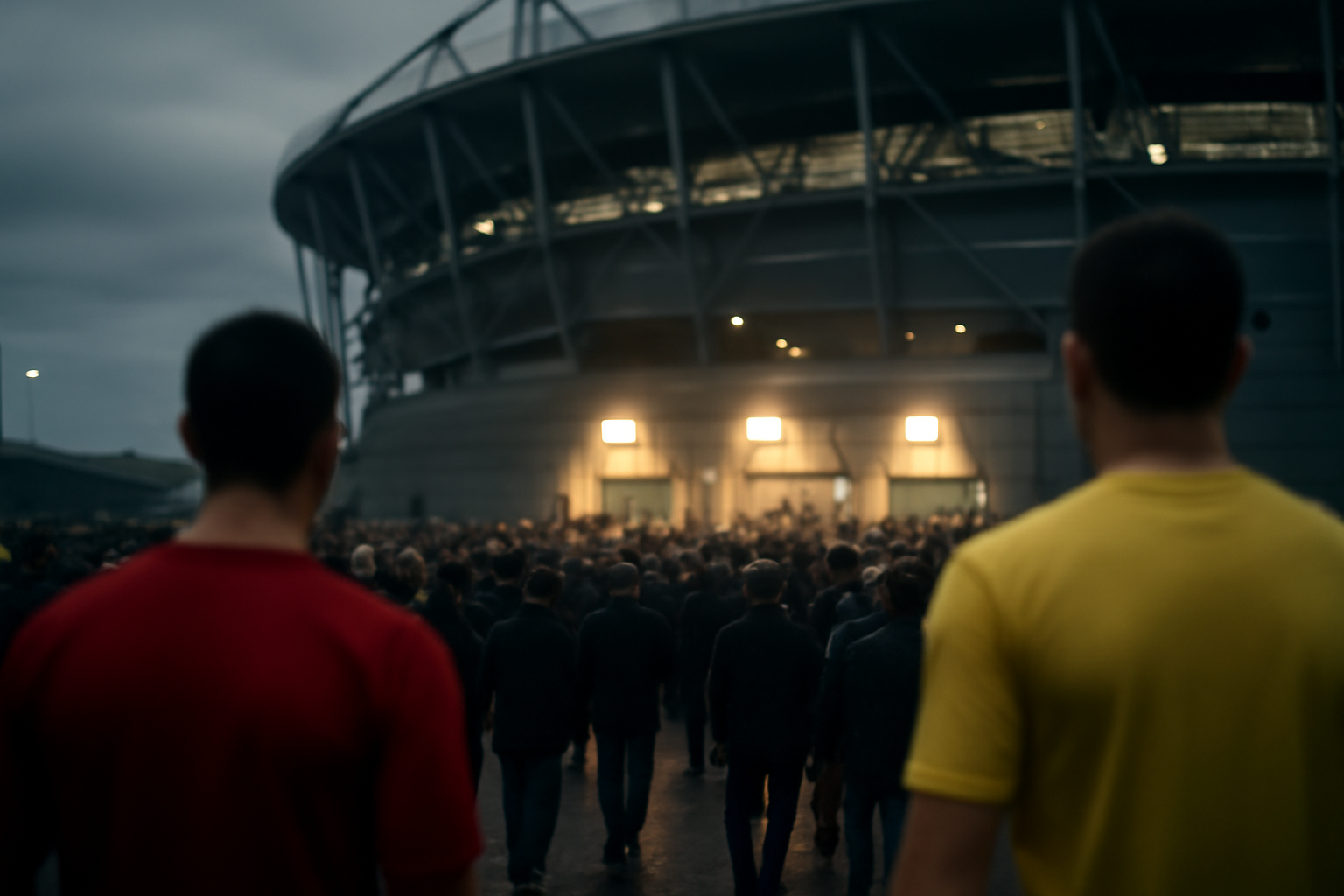
Marassi on a Friday night can be a hostile place for visitors. The crowd is close to the pitch, the noise is constant and the Genoa support has a reputation for making players feel the pressure of every misplaced pass. That is real. It is a factor that no model can fully capture. But it is also a factor that matters more when the home team can sustain pressure and force mistakes. Against a side like Como, who keep the ball and play through pressure rather than around it, the crowd's influence can fade into frustration.
Genoa's supporters will demand intensity, commitment and a refusal to be outrun. Their players will deliver that, because that is the minimum requirement for any side wearing the griffin. The question is whether that intensity translates into clear chances. Against a back four that reads danger well and a midfield that protects the defence, running harder is not always enough. You need precision, and precision is in short supply when you are chasing the ball for long stretches.
I keep coming back to the midfield because that is where this match will be decided. Frendrup and Sow are good players, but they are asked to do a job that does not fit their strengths against this opposition. They must cover the passing lanes, track the runners and still provide an outlet for the defence. Milla and Da Cunha only have to do one of those things at a time, because they share the responsibilities between them and because the three attackers ahead of them do the pressing work that reduces the space Genoa have to play in.
A conclusion without the cliches
So where does that leave us? The model sees Como as the clear favourites, with a 49% win probability against Genoa's 23%. The probable XIs support that view. Como have more technical quality in the areas that matter most, a clearer tactical identity and a striker who fits their system perfectly. Genoa have the crowd, the physicality and the hope that a single moment can change everything. That hope is real. It is what makes football worth watching. But it is not a strategy.
My honest reading is that Como control the tempo, score once or twice and manage the match from a position of comfort. Genoa will have their moments, particularly from set pieces and the running of Baldanzi, but they will struggle to create enough sustained pressure to turn the game. A draw is possible, and the 28% suggests that is not an accident. If Genoa can keep it tight and steal a goal from a dead ball, they have the character to hold on. But the safer assumption is that Como's quality tells over 90 minutes.
This is not a prediction dressed as certainty. It is a forecast based on the evidence. The evidence says Como are the better side. The evidence says they will probably win. Friday night at Marassi will tell us whether the evidence is right.
| Side | P (W-D-L) | Win rate | GF-GA | |
|---|---|---|---|---|
| Genoa | 1162 | 373-358-431 | 32% | 1418-1536 |
| Como | 368 | 122-118-128 | 33% | 455-475 |
Serie A · Fri, 04 Sep 2026 18:45
Genoa v Como